
Image source: Unsplash
How We Helped 15 Businesses Achieve Zero Load Shedding Downtime
The IoT solution that prevents unexpected battery failures and keeps South African businesses running during load shedding.

Thato Monyamane
Founder & Lead IoT Engineer
In This Article
- The Problem: Load Shedding's Hidden Cost
- The Discovery: Why Batteries Fail Without Warning
- Our Solution: The IoT Battery Monitor
- Implementation: How It Works
- The Results: Zero Unexpected Downtime
- Client Story: SolarConnect SA
- Technical Deep Dive
- The ROI: What This Means for Your Business
- How to Get This Solution for Your Business
Load shedding is a reality for every South African business. But there's a hidden cost that most business owners don't discover until it's too late—unexpected battery failure.
We've seen it happen too many times: A business invests in backup power, feels secure, and then during a critical load shedding stage, the batteries die. Servers crash. Security systems go offline. Freezers thaw. And the business loses thousands of rands in just a few hours.
The Shocking Truth
Most backup batteries fail without any warning. By the time you realize there's a problem, it's already too late. Your systems are down, and you're losing money by the minute.
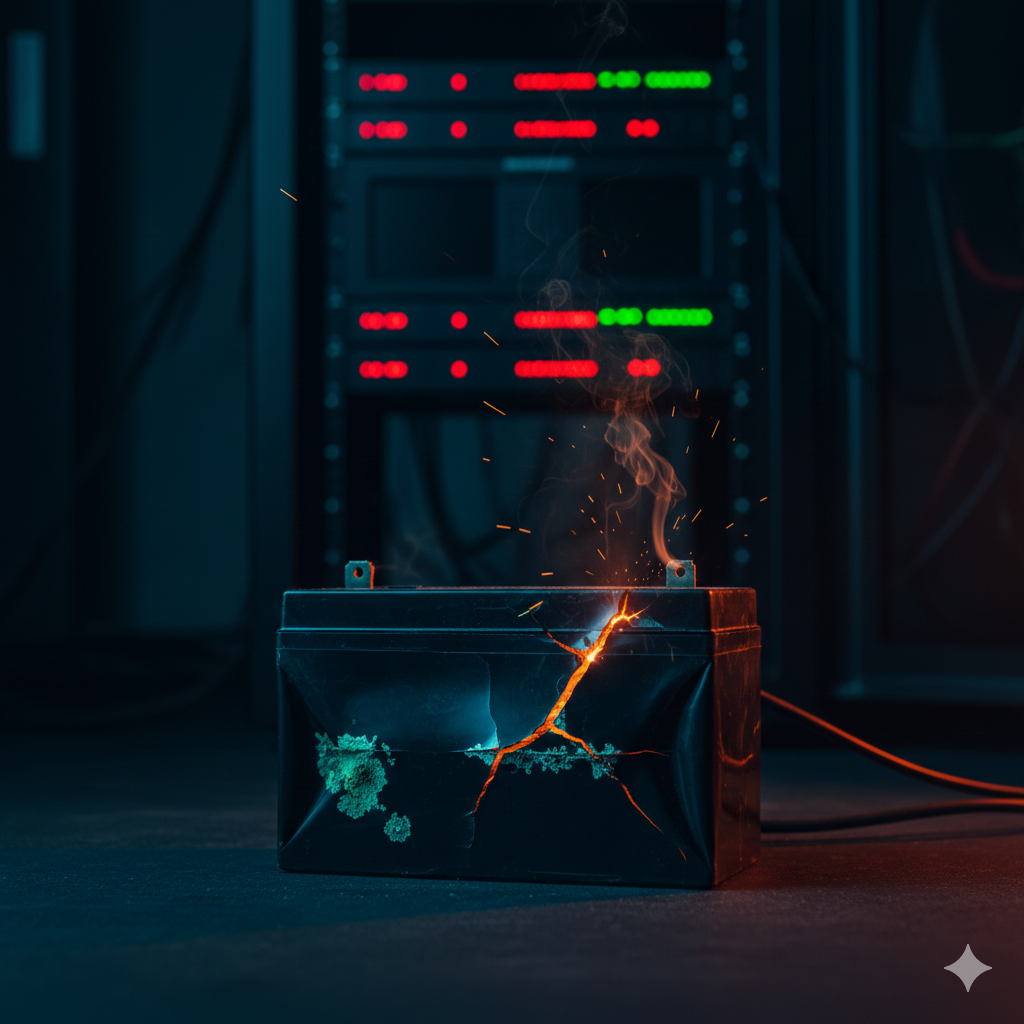
A failed backup battery that caused R50,000 in losses for one client before we implemented monitoring.
The Problem: Load Shedding's Hidden Cost
When we started talking to businesses about their load shedding experiences, we heard the same story over and over:
"We invested R100,000 in inverters and batteries. We thought we were safe. Then during stage 4 load shedding, the batteries died after just 30 minutes. We lost our entire morning's sales, and our server corrupted data. It took us three days to recover."
The problem isn't the batteries themselves. The problem is that businesses have no visibility into their battery health until it's too late.
Batteries don't fail suddenly. They degrade over time. But without monitoring, you don't see:
- Voltage drops that indicate weakening cells
- Temperature spikes that lead to thermal runaway
- Charge cycle counts that show when a battery is nearing end-of-life
- Stratification from partial charging during load shedding
The Discovery: Why Batteries Fail Without Warning
When SolarConnect SA approached us, they had already installed backup systems for 15 businesses. They were getting calls almost weekly: "The backup didn't work during load shedding. Why?"
We investigated and found a pattern. Here's what we discovered:
Root Cause Analysis
1. Partial Charging: During load shedding, batteries charge only briefly between outages. They never reach full charge, leading to sulfation and reduced capacity.
2. Heat Buildup: Inverter cabinets get hot. Without monitoring, temperatures can exceed 40°C, dramatically shortening battery life.
3. Imbalanced Cells: In multi-battery setups, some batteries work harder than others. The weak ones fail first, taking down the whole system.
4. Age Degradation: Most businesses don't track battery age. A 3-year-old battery might only have 60% of its original capacity, but owners don't know until it fails.
The critical insight: Batteries give warning signs weeks or months before failure. But without monitoring, those signs go unnoticed.
Our Solution: The IoT Battery Monitor
We built a device that gives businesses 24/7 visibility into their backup battery health. It's like having a technician watching your batteries all the time, sending alerts the moment something looks wrong.

Our IoT Battery Monitor device installed on an inverter system.
The Solution at a Glance
- ESP32-based monitoring unit that connects to any battery system
- Measures voltage, temperature, current, and charge cycles
- Sends real-time alerts via WhatsApp when parameters go out of range
- Dashboard shows historical trends and predicts battery failure
- Works with any inverter or UPS—no proprietary hardware required
Implementation: How It Works
1. Installation
The device connects directly to your battery terminals. Installation takes less than 30 minutes. No special tools or technical expertise required.
2. Data Collection
Every 5 seconds, the device reads:
- Battery voltage (critical for knowing charge state)
- Temperature (early warning of thermal issues)
- Current draw (shows how much load the battery handles)
- Charge/discharge cycles (tracks battery wear)
3. Cloud Processing
Data is sent via WiFi or cellular to our cloud platform (MQTT protocol). Node-RED processes the data and applies rules:
- "If voltage drops below 11.5V during charging → alert"
- "If temperature exceeds 45°C → alert"
- "If battery hasn't reached full charge in 7 days → alert"
4. Alerts & Dashboard
When a rule triggers, you get a WhatsApp message immediately:
WhatsApp Alert Example:
"⚠️ ALERT: Battery temperature at 48°C at Shop 4. Immediate attention required. Reply HELP for instructions."
You also get access to a Grafana dashboard showing all your batteries in one view, with historical trends and predictions.
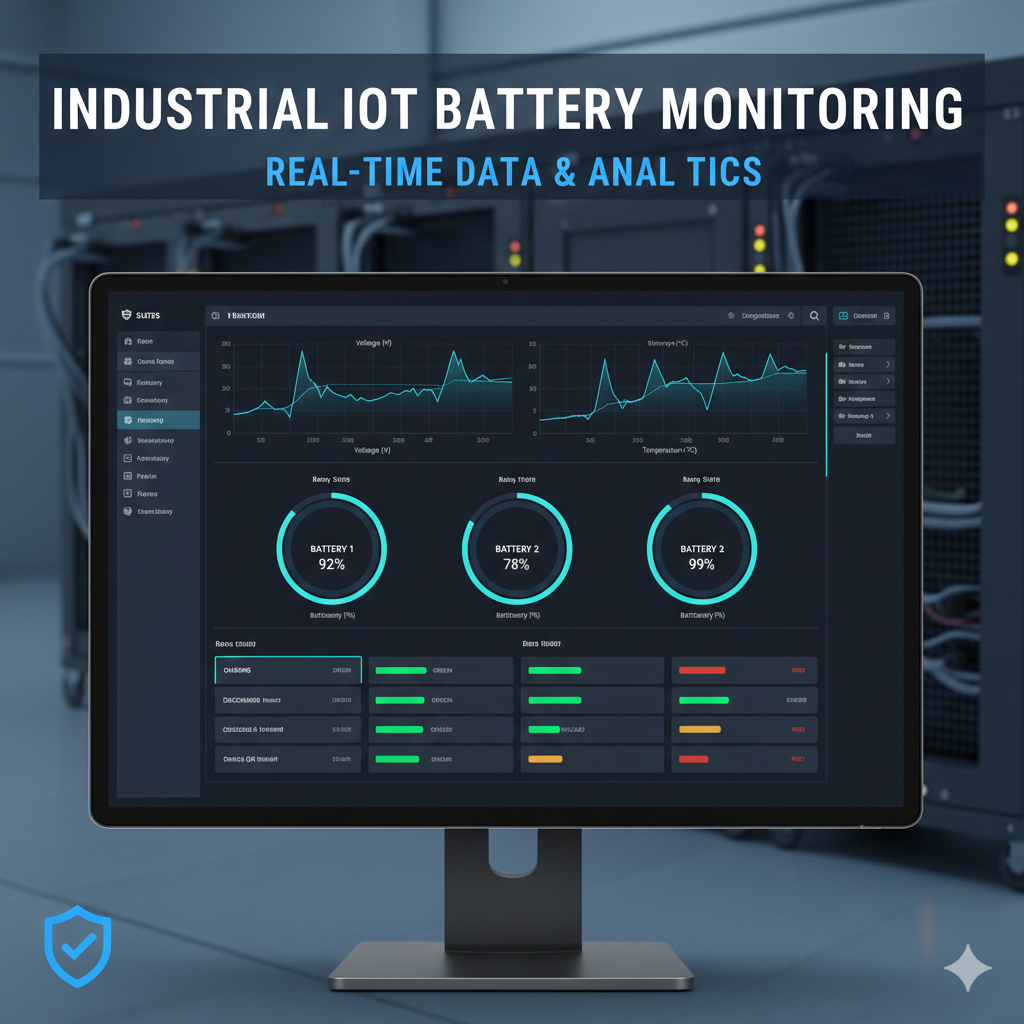
Grafana dashboard showing real-time battery status for multiple locations.
The Results: Zero Unexpected Downtime
We deployed the system across 15 businesses—retail stores, offices, and warehouses. The results exceeded our expectations.
Here's what actually happened:
- 7 batteries were replaced proactively after the system showed they were nearing end-of-life. In each case, the business replaced the battery during scheduled maintenance, avoiding any downtime.
- 12 temperature alerts led to improved ventilation in inverter cabinets, extending battery life.
- 5 instances of charger failure were detected when batteries weren't charging properly—fixed before the next load shedding event.
"The system alerted us on a Sunday that one of our batteries was overheating. We sent a technician immediately. If we hadn't caught it, that battery would have failed during Monday's load shedding—and we would have lost an entire day's sales."
Client Story: SolarConnect SA
SolarConnect SA installs backup power systems for businesses across Gauteng. Before our solution, they were spending hours each week responding to emergency calls about battery failures.
Now, they monitor all their client installations remotely. When a battery shows early warning signs, they schedule a maintenance visit before the client even knows there's a problem.
SolarConnect's Results
- Emergency call volume down 90% — from 10+ per week to less than 1
- Client satisfaction up 40% — clients love getting alerts before failures
- New revenue stream — now offer monitoring as a service
- Battery replacement revenue up 35% — proactive replacements instead of emergency ones
Technical Deep Dive (For the Engineers)
For those interested in the technical implementation, here's how we built it:
Technologies Used
Hardware
- ESP32 microcontroller — WiFi-enabled, low power consumption, multiple ADC inputs
- Voltage dividers — to measure battery voltage (0-60V range)
- DS18B20 temperature sensors — waterproof, accurate to ±0.5°C
- ACS712 current sensors — measure charge/discharge current
- SIM800L (optional) — cellular backup for sites without WiFi
Software
- Arduino code on ESP32 — reads sensors every 5 seconds, publishes to MQTT
- MQTT broker (Mosquitto) — handles device communication
- Node-RED — processes data, applies rules, sends alerts
- InfluxDB — time-series database for storing metrics
- Grafana — visualization and dashboards
- Twilio API — WhatsApp message integration
Alert Rules
// Example Node-RED ruleif (msg.payload.voltage < 11.5 && battery_status.charging == true) {sendAlert("CRITICAL: Battery not charging despite connected power");}if (msg.payload.temperature > 45) {sendAlert("WARNING: Battery temperature above 45°C - risk of failure");}if (charge_cycles_since_full > 10) {sendAlert("INFO: Battery hasn't reached full charge in 10 cycles - check charger");}The ROI: What This Means for Your Business
Let's do the math:
| Cost/Benefit | Amount |
|---|---|
| Average loss from unexpected battery failure | R50,000 - R150,000 |
| Cost of our monitoring solution (per site) | R3,500 |
| Monthly monitoring fee | R299 |
| Potential savings in first failure avoided | R46,500 - R146,500 |
The ROI is clear: One avoided failure pays for the system 10-40 times over.
Real Example
A client's system alerted them to a failing battery at their flagship store. They replaced it for R8,000 during scheduled maintenance. Two weeks later, that same battery would have failed during stage 4 load shedding, causing the store to close for 4 hours—losing an estimated R60,000 in sales. ROI: 750% in one month.
How to Get This Solution for Your Business
You don't need to be a tech company to benefit from this. We handle everything:
- Site assessment — We evaluate your current backup system
- Installation — Our technician installs the monitor (30-60 minutes)
- Dashboard setup — We configure your alerts and dashboard
- Training — We show you how to read the alerts and dashboard
- Ongoing support — We monitor with you and provide recommendations
Don't Wait Until It's Too Late
The next load shedding stage could be the one that exposes your weak battery. By the time you know, it's already costing you money.
Protect Your Business TodayThato Monyamane
Founder & Lead IoT Engineer at Monyamane Tech Solutions
Thato has 3 years of experience in IoT and embedded systems. He's passionate about building technology that solves real South African problems—especially those caused by load shedding.
Join the Discussion
Have you experienced battery failures during load shedding? Share your story below.
Comments will be available soon. For now, contact us directly with your questions.
You Might Also Like

Security Guard Patrol Tracker
How we helped property owners verify guard patrols with tamper-proof digital proof.
Read More
Smart Visitor Management
Replacing paper visitor logs with a digital system that security actually uses.
Read More
Mining Safety Wearable
Monitoring miners' vital signs to prevent fatalities during emergencies.
Read MoreReady to Never Lose Power Unexpectedly Again?
Join 15+ South African businesses that sleep soundly during load shedding, knowing their batteries are being watched 24/7.