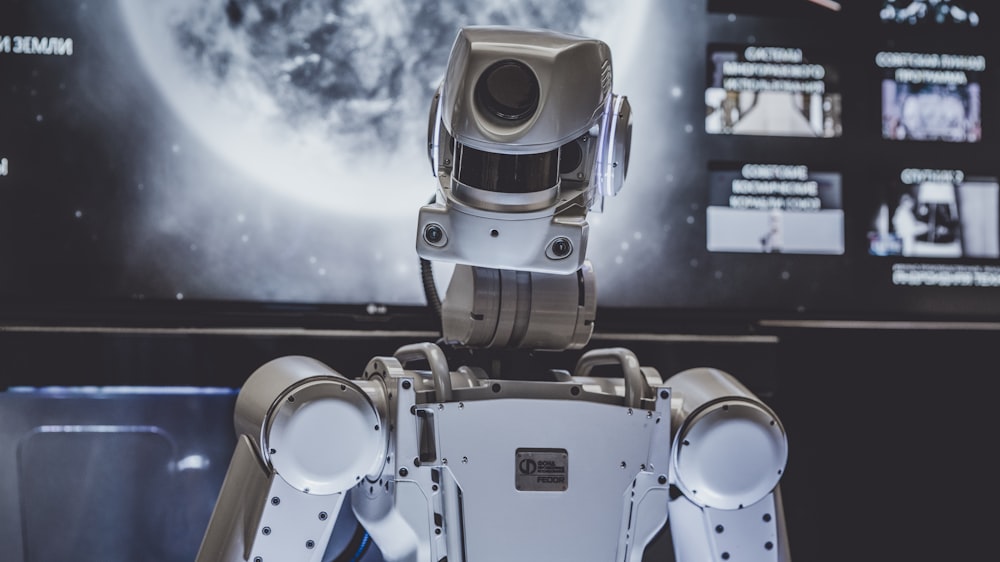
Image source: Unsplash
Automation improves efficiency across IT operations, development pipelines, and security workflows. In 2026, automation has evolved from a productivity enhancement to a fundamental business capability that determines organizational survival. With AI integration, hyper-automation, and autonomous systems becoming mainstream, organizations that fail to embrace automation at scale are being outcompeted on speed, quality, cost, and innovation.
The State of Automation in 2026
Automation has reached an inflection point:
- 94% of organizations now have enterprise-wide automation strategies, up from 58% in 2023
- The average company automates 45% of repetitive tasks, saving 15+ hours per employee weekly
- Automated systems handle 68% of IT operations and 52% of security incident responses
- Organizations with mature automation achieve 3.2x faster innovation cycles and 40% lower operational costs
The Automation Imperative
In 2026, automation is no longer about doing the same things faster—it's about enabling entirely new capabilities, business models, and competitive advantages that were previously impossible at human scale.
Key Automation Trends Shaping 2026
1. AI-Augmented Hyper-Automation
The convergence of AI with traditional automation tools:
Hyper-Automation Components
- Intelligent Process Discovery: AI that analyzes workflows and suggests automation opportunities
- Self-improving Automation: Systems that learn from outcomes and optimize their own workflows
- Natural Language Automation: Create automations through conversational interfaces
- Predictive Automation: Systems that anticipate needs and trigger actions before requests
- Multi-modal Automation: Combining RPA, AI, IoT, and human-in-the-loop systems
2. Autonomous IT Operations (AIOps)
Self-healing, self-optimizing IT infrastructure:
| Capability | Traditional Approach | 2026 Autonomous Approach | Impact |
|---|---|---|---|
| Incident Response | Manual investigation, human triage, manual remediation | AI detects anomalies, auto-correlates events, executes playbooks | MTTR reduced from hours to minutes |
| Capacity Planning | Quarterly reviews, manual forecasting, reactive scaling | Continuous monitoring, predictive scaling, auto-provisioning | 30-40% infrastructure cost reduction |
| Security Operations | Alert triage, manual investigation, human response | Threat hunting, auto-containment, adaptive defenses | 95% of threats contained automatically |
| Change Management | Change approval boards, manual testing, scheduled deployments | Automated testing, canary deployments, auto-rollback on failure | 10x more changes with 90% fewer incidents |
"We've moved from automating tasks to automating entire business processes, and now we're automating the automation itself. The most advanced systems in 2026 design, implement, and optimize their own automations based on business objectives."
3. Developer-Centric Automation (DevOps 3.0)
Automation that empowers rather than replaces developers:
- AI-Paired Programming: Real-time code suggestions, automated refactoring, bug prediction
- Self-Service Platforms: Developers provision infrastructure through natural language requests
- Intelligent Testing: AI-generated tests, automated test maintenance, flaky test detection
- Autonomous Deployment: Systems that decide when and how to deploy based on risk analysis
Industry-Specific Automation Transformations
Healthcare: Autonomous Clinical Operations
- Patient Triage: AI analyzing symptoms, scheduling appointments, prioritizing cases
- Diagnostic Support: Automated analysis of medical images, lab results, patient history
- Administrative Automation: Insurance processing, appointment scheduling, billing
- Impact: 40% reduction in administrative burden, 25% faster diagnoses
Manufacturing: Lights-Out Factories
- Predictive Maintenance: IoT sensors predicting failures before they occur
- Quality Control: Computer vision inspecting every product in real-time
- Supply Chain Optimization: Autonomous inventory management, dynamic routing
- Impact: 99.9% quality rates, 60% reduction in unplanned downtime
Financial Services: Autonomous Risk Management
- Fraud Detection: Real-time transaction analysis, automated investigation
- Regulatory Compliance: Continuous monitoring, automated reporting
- Wealth Management: AI-powered portfolio optimization, automated rebalancing
- Impact: 95% faster fraud detection, 70% reduction in compliance costs
The 2026 Automation Technology Stack
Modern Automation Platform Components
- Orchestration Engines: Apache Airflow, Prefect, Temporal for workflow management
- RPA Platforms: UiPath, Automation Anywhere, Blue Prism with AI integration
- Low-Code/No-Code: Microsoft Power Platform, Retool, Appian for citizen developers
- AI/ML Integration: OpenAI API, Google Vertex AI, AWS SageMaker for intelligent automation
- Process Mining: Celonis, UiPath Process Mining for discovery and optimization
- Integration Platforms: Zapier, Make, Microsoft Power Automate for connecting systems
Key Benefits Beyond Efficiency
| Benefit Category | Traditional View | 2026 Strategic Value |
|---|---|---|
| Operational Resilience | Reduce human error, increase consistency | Create self-healing systems that adapt to disruptions |
| Employee Experience | Eliminate repetitive tasks | Enable human-AI collaboration, focus on creative work |
| Innovation Acceleration | Faster execution of existing processes | Rapid experimentation, automated scaling of successful ideas |
| Customer Experience | Faster response times | Hyper-personalization, predictive service, 24/7 availability |
| Data-Driven Decisions | Automated reporting | Real-time insights, automated action on recommendations |
Implementation Challenges and Solutions
Common Automation Pitfalls
Automation Implementation Risks
- Automating Broken Processes: Automating inefficient workflows amplifies problems
- Lack of Governance: Uncontrolled automation creating security and compliance risks
- Skill Gaps: Teams lacking automation engineering and AI integration skills
- Change Resistance: Employees fearing job displacement rather than augmentation
- Technical Debt: Fragmented automation solutions creating integration nightmares
Best Practices for 2026
- Start with Strategy: Align automation initiatives with business objectives
- Embrace Citizen Development: Empower business users while maintaining governance
- Implement Center of Excellence: Centralized expertise, best practices, tool selection
- Measure Holistically: Track not just efficiency but innovation, quality, and employee satisfaction
- Plan for Evolution: Design systems that can incorporate new AI capabilities as they emerge
Human-Automation Collaboration Models
The Spectrum of Automation
- Human in Command: Human makes decisions, automation executes (traditional RPA)
- Human in the Loop: Automation suggests actions, human approves (AI recommendations)
- Human on the Loop: Automation operates independently, human monitors (autonomous systems)
- Human out of the Loop: Fully autonomous operation with human oversight only (lights-out operations)
Skills Evolution for the Automation Era
Essential Skills for 2026
- Automation Engineering: Designing, implementing, and maintaining automated systems
- Prompt Engineering: Effectively communicating with AI systems to achieve desired outcomes
- Process Optimization: Analyzing and redesigning workflows for automation
- AI Collaboration: Working effectively with AI systems as team members
- Ethical Oversight: Ensuring automated systems operate fairly and responsibly
Real-World Case Studies
Case Study: Global E-commerce Platform
Challenge: Managing 10,000+ daily deployments, responding to millions of customer inquiries, optimizing supply chain with thousands of partners.
Automation Solution:
- Autonomous DevOps: AI-driven testing, deployment, and rollback decisions
- Intelligent Customer Service: AI handling 85% of inquiries, escalating only complex cases
- Dynamic Supply Chain: Real-time optimization of inventory, shipping, and partner coordination
Results: 99.99% system availability, 40% faster issue resolution, $150M annual operational savings.
Case Study: Insurance Provider
Challenge: Manual claims processing taking 15+ days, high error rates, regulatory compliance burden.
Automation Solution:
- Intelligent Claims Processing: AI analyzing claims, documents, and policy details
- Automated Compliance: Continuous monitoring of regulatory changes, auto-updating processes
- Predictive Fraud Detection: AI identifying suspicious patterns in real-time
Results: Claims processing reduced to 2 hours, 95% accuracy rate, 70% reduction in fraudulent claims.
Future Trends: 2027 and Beyond
1. Autonomous Business Units
Entire business functions (marketing, sales, customer service) operating autonomously with AI making strategic decisions.
2. Self-Optimizing Organizations
Companies where automation continuously redesigns processes, organizational structures, and business models.
3. Emotionally Intelligent Automation
Systems that understand and respond to human emotions in customer service, healthcare, and education.
4. Quantum-Enhanced Automation
Quantum computing enabling optimization of previously unsolvable automation challenges.
Getting Started: 90-Day Automation Roadmap
- Month 1: Assessment & Foundation
- Identify high-impact automation opportunities
- Establish automation governance framework
- Select initial automation platform and tools
- Train core team on modern automation practices
- Month 2: Pilot Implementation
- Automate 3-5 high-value, repetitive processes
- Implement monitoring and measurement
- Establish feedback loops for optimization
- Document learnings and best practices
- Month 3: Scale & Expand
- Expand to additional departments and processes
- Integrate AI capabilities into existing automations
- Establish citizen development program
- Create automation portfolio roadmap
Conclusion: The Autonomous Organization
In 2026, automation has transcended its roots in task efficiency to become the foundational capability for organizational agility, resilience, and innovation. The most successful organizations aren't just using automation—they're becoming autonomous organizations where:
- Systems anticipate needs and act before being asked
- Humans focus on creativity, strategy, and exception handling
- Continuous improvement is automated and data-driven
- Business models evolve autonomously based on market signals
The choice is no longer whether to automate, but how quickly and comprehensively to build autonomous capabilities. Organizations that master automation in 2026 will create sustainable competitive advantages through unprecedented speed, scale, and intelligence—transforming not just how they work, but what they're capable of achieving.